
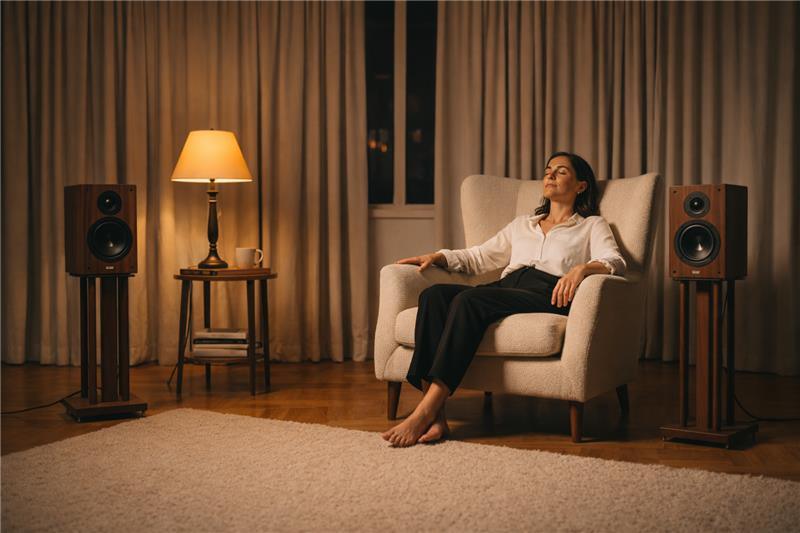
Becoming a Better Listener
The Most Important Audiophile Skill Costs Nothing — and Changes Everything
Your Ears Are the Most Important Component in Any Audio System
In Blog 1, we explored what high-end audio is and why it matters. In Blog 2, we covered how to choose and budget for a system. But here is something that might surprise you: the single most powerful upgrade you can make to your audio experience costs absolutely nothing.
It is learning how to listen.
A person with trained ears and a modest system will get more musical satisfaction than someone with untrained ears and a AED 100,000 setup. That is not an exaggeration — it is the foundation of the entire audiophile hobby.
Robert Harley dedicates an entire chapter of his book to this subject — Chapter 3, "Becoming a Better Listener" — because he understands that equipment is meaningless without the ability to hear what it is doing. This blog will teach you the language of sound quality, how to identify what you are hearing, and how to set up your first real listening session at home.
The Difference Between Hearing and Listening
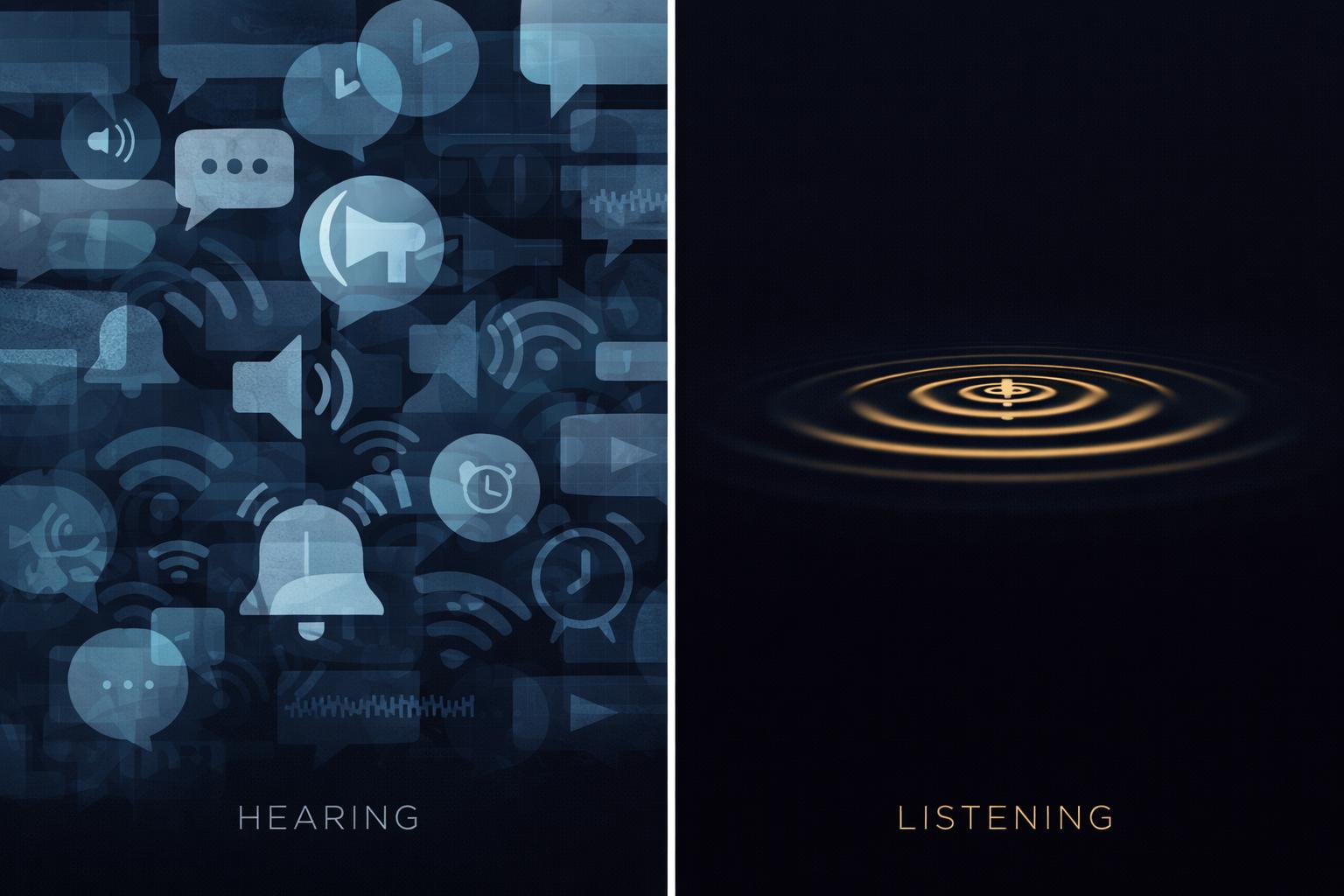
Hearing is passive. Your ears pick up sound whether you want them to or not. The air conditioning hum, traffic outside, the notification ping on your phone — you hear all of it without effort.
Listening is deliberate. It is the act of directing your attention to specific qualities of sound and actively processing what you perceive. When you listen to a song and try to follow just the bass guitar, or notice how the singer's voice echoes in the recording space, or feel the difference between a gentle passage and a powerful one — that is listening.
Critical listening takes this one step further. It is listening with the specific intent of evaluating sound quality — identifying what is good, what is lacking, and why.
Think of it like coffee. The first time you tried coffee, it was just bitter or not. Over time, you started noticing chocolate notes, acidity, smoothness, body. Nobody taught you — exposure and attention did the work. Critical listening is exactly the same. You are training your perception, not gaining a superpower.
Audiophile Values: What Matters Most in Sound Quality
Before you can evaluate sound, you need a vocabulary. Robert Harley calls these "audiophile values" — the specific qualities that separate good sound from great sound. We introduced some of these in Blog 1. Now we go deeper.
There are six core qualities to listen for. You do not need to hear all of them at once. In fact, the best approach is to focus on one per listening session until each becomes second nature.
1. Tonal Balance — The Foundation of Good Sound
Tonal balance is how evenly the bass, midrange, and treble frequencies are represented. Think of it as the EQ of real life — when you listen to a live acoustic performance, no single frequency range dominates. Everything sounds natural and in proportion.
A system with good tonal balance reproduces music the same way. You hear the deep warmth of a cello, the presence of a human voice, and the shimmer of a cymbal all in proper proportion — no single element overpowering the others.
What Tonal Imbalance Sounds Like
- Too much bass: Music sounds boomy, thick, or muddy. Bass notes blur together. Vocals sound muffled.
- Too much treble: Music sounds thin, bright, harsh, or fatiguing. Sibilance (sharp "s" sounds) on vocals becomes painful.
- Too much midrange: Music sounds honky, nasal, or boxy. Like listening through a cardboard tube.
- Good tonal balance: Nothing dominates. The music sounds natural, as if the performers were in the room.
Play a song with a prominent acoustic guitar. Can you hear the body of the guitar (bass), the strings being plucked (midrange), and the shimmer of the pick on the strings (treble) all in balance? If one dominates, that reveals where your system's tonal balance shifts.
2. Soundstage and Imaging — The 3D Experience
This is the quality that makes people gasp the first time they hear a truly good system. Soundstage is the three-dimensional illusion of width, depth, and height that music creates between and beyond your speakers.

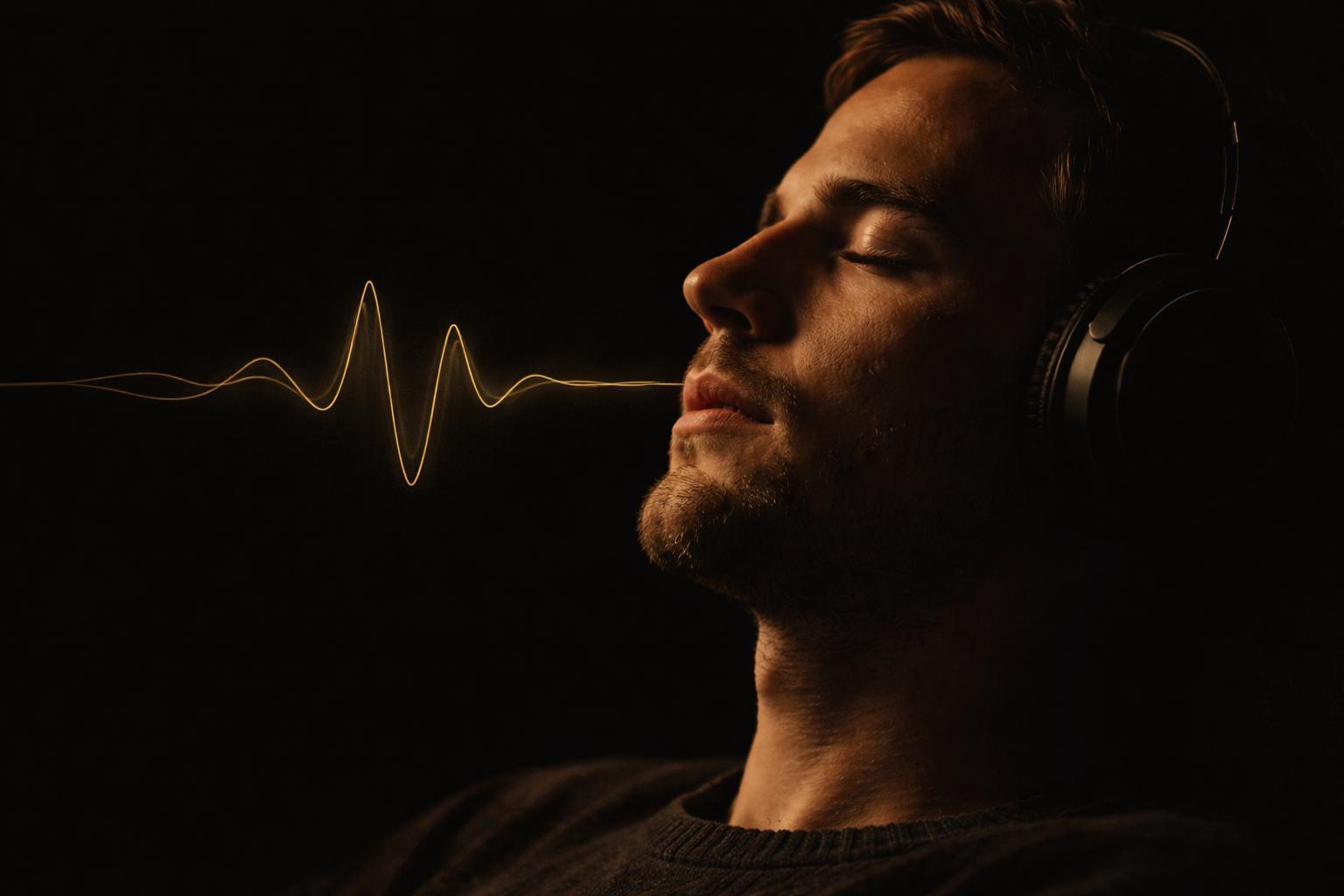
Soundstage: Width and Depth
Close your eyes while music plays through properly set-up speakers. Can you sense a stage in front of you? Does it extend beyond the physical boundaries of the speakers? Can you perceive some instruments being closer to you and others further back? That is soundstage depth — and it is one of the most magical qualities of high-end audio.
Imaging: Precision Within the Soundstage
While soundstage describes the overall space, imaging describes the precision with which individual instruments are placed within it. Can you point to exactly where the vocalist stands? Is the drummer behind the singer, slightly to the right? Is the piano over on the left? Good imaging creates a vivid, precise map of the performers.
Poor imaging blurs everything together into a vague wall of sound. The music still plays, but you lose the sense of individual performers in a physical space.
Play a well-recorded jazz trio — piano, bass, drums. Close your eyes. Can you locate each instrument in the space between the speakers? Does the piano sit to one side? Does the bass have physical weight in a specific location? If so, your system has good imaging.
3. Dynamics and Detail — The Life Force of Music
Macro-Dynamics
These are the large swings between quiet and loud. An orchestra building from a whisper to a thunderous crescendo. A rock song exploding from a quiet verse into a massive chorus. A system with good macro-dynamics preserves the thrill and impact of these moments. A poor system compresses them — everything comes out at roughly the same volume, and the music loses its emotional power.
Micro-Dynamics
These are the tiny, subtle variations that give music life and realism. The difference in force between a softly plucked guitar string and a firmly strummed one. The way a vocalist's breath catches slightly before a phrase. The gentle decay of a piano note fading into silence. Micro-dynamics are what separate a system that sounds "good" from one that sounds "alive."
Detail and Resolution
Detail is the ability to hear fine information in a recording — the pick hitting a guitar string, a page turning in a sheet music book, the natural reverberation of the recording space, a singer's lips parting before a phrase. A revealing system does not add these details — they were always in the recording. It simply stops hiding them.
4. Pace, Rhythm, Timing, and Musicality
This is the quality that makes you tap your foot. Some systems present all the notes accurately but somehow sound lifeless. Others make you want to dance, sway, or lean forward in your chair. The difference is often described as "pace, rhythm, and timing" — or more simply, musicality.
A musical system conveys the rhythmic drive and emotional intent of a performance. The drums feel punchy and precise. The bass locks in with the kick drum. The tempo feels right — not sluggish, not rushed. When pace, rhythm, and timing are correct, the music flows naturally and you connect with it emotionally.
A system can measure perfectly and still fail the musicality test. If you find yourself analysing instead of enjoying, something is wrong — either with the system or with how you are listening.
The Complete Listening Vocabulary — Quick Reference
| Quality | What It Means | What to Listen For |
|---|---|---|
| Tonal Balance | Even distribution of bass, mids, treble | Does any frequency range dominate unnaturally? |
| Soundstage | 3D illusion of width, depth, height | Do the speakers "disappear"? Does music extend beyond them? |
| Imaging | Precise placement of instruments | Can you point to each instrument's location? |
| Dynamics | Contrast between quiet and loud | Do crescendos thrill? Do quiet passages feel intimate? |
| Detail | Fine information in recordings | Can you hear breaths, pick noise, room ambience? |
| Musicality | Emotional engagement and rhythm | Do you tap your foot? Do you want to keep listening? |
The Pitfalls of Critical Listening
Robert Harley warns about an important danger: becoming so analytical that you stop enjoying music. Critical listening is a tool, not a permanent state of mind. The goal is to develop your perception so you can make better decisions about equipment and setup — then forget the analysis and lose yourself in the music.
Three Traps to Avoid
Listening to Equipment Instead of Music
If you spend more time noticing what your system does wrong than enjoying what it does right, step back. Put on an album you love and just listen. No analysis. No critique. Just music.
Expectation Bias
If you just spent a significant amount on a new component, you want it to sound amazing. This bias is real and powerful. If possible, do some listening before you know the price. Let your ears decide, not your wallet.
Listener Fatigue
Your ears get tired just like your eyes. After 45–60 minutes of focused listening, take a break. If everything starts sounding the same, stop. Come back tomorrow with fresh ears.
Setting Up Your First Critical Listening Session
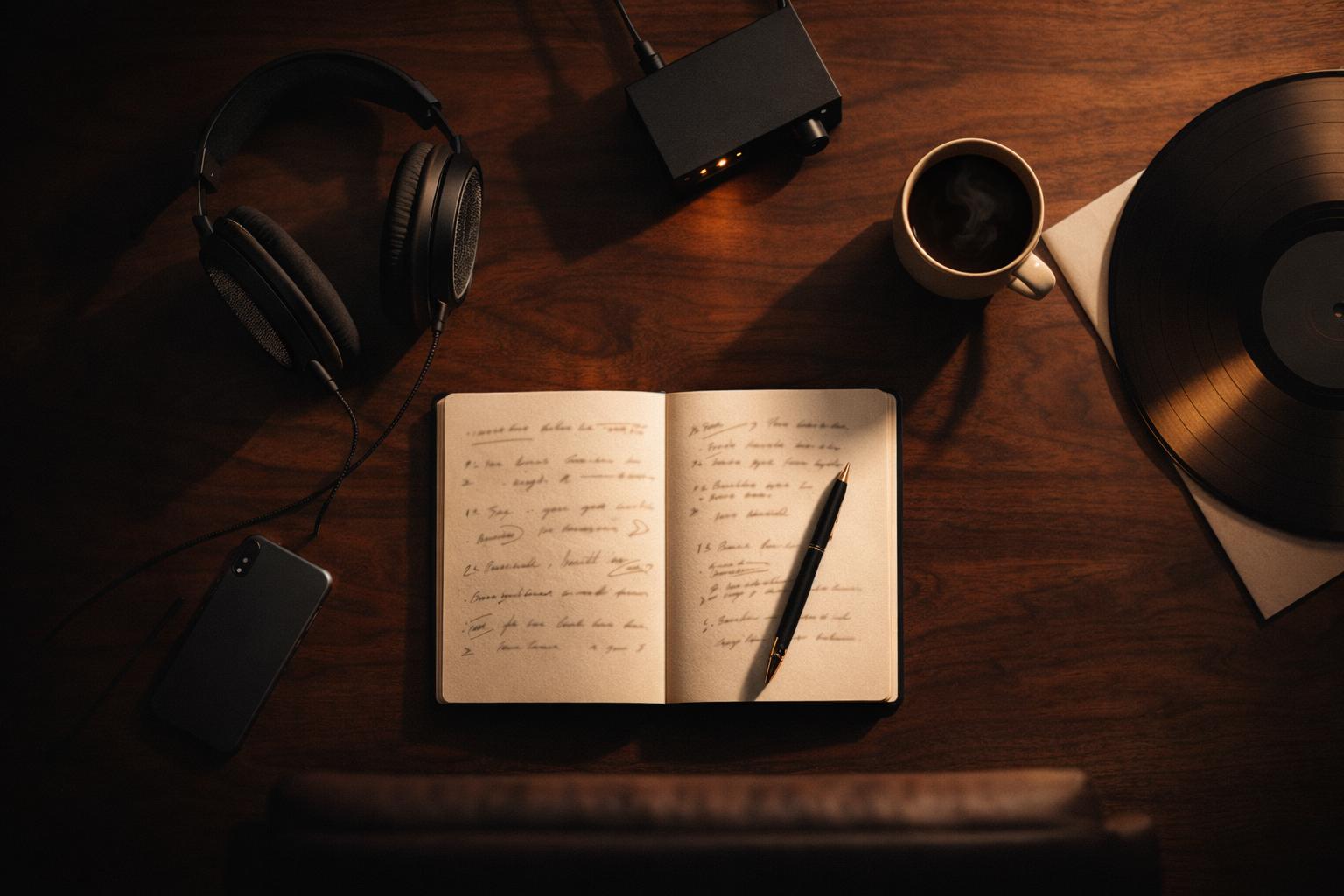
You do not need expensive equipment for this. You need a quiet room, a pair of decent headphones or speakers, music you know well, and 30 minutes of undistracted time.
Step-by-Step Guide
Prepare the room. Close the door. Turn off notifications. Dim the lights if you like — reducing visual stimulation helps your ears focus. If using speakers, sit at the listening triangle (equal distance from each speaker as the speakers are from each other).
Choose familiar music. Pick three to five songs you know intimately — songs you have heard hundreds of times. Include different genres: something acoustic, something with vocals, something with dynamic range.
Set the volume. Moderate — roughly conversational level (70–80 dB). Loud enough to hear detail, quiet enough that your ears will not fatigue. Resist the urge to turn it up. Louder sounds "better" regardless of quality.
Focus on one quality at a time. First pass: tonal balance. Second pass: close your eyes and map the soundstage. Third pass: dynamics — do quiet passages feel intimate, do loud ones have impact?
Take notes (optional but powerful). Write down what you notice. "Bass felt boomy on Track 2." "Could hear the room on the vocal recording." "Guitar placement slightly left." This builds your listening vocabulary faster than anything else.
End with enjoyment. After your focused listening, put on a favourite album and simply enjoy it. No analysis. This reminds you why you are doing this in the first place: for the love of music.
Do one focused listening session per week for six weeks. By the end, you will hear things in music you never knew existed — on the same equipment you already own. Your system did not get better. Your ears did.
Frequently Asked Questions
Expert answers to common questions about developing your listening skills.
What is Coming Next
You now have the system (Blog 2) and the ears (Blog 3) to begin your audiophile journey. In Blog 4, we go deeper into the first component in the audio chain: the preamplifier. What does it do? Do you need one? And what should you listen for when choosing one?
Equipment is the tool. Your ears are the instrument. Now both are ready.
Start Training Your Ears Today
From reference headphones to audiophile-grade speakers — explore equipment that reveals every detail in your music. Our audio specialists can help you find the perfect listening companion.
Shop Headphones & Speakers →Helping music lovers in the UAE and Saudi Arabia discover the joy of high-quality sound.